Cut complexity
What it means
Strip away the noise: the vanity metrics, the dashboards nobody reads, the twelve priorities that are really none.
What you get
A single view of where your growth actually comes from and where it leaks.
Growth advisory for consumer brands
Has your brand hit a plateau? Let's find the next curve.
Ads cost more every quarter. Customers buy once and disappear. Marketplaces and your own site pull in different directions. I help consumer brands find where growth is leaking and fix what matters first, with the discipline of someone who has run growth for businesses with millions of customers.
Results from my operating career at Airtel and Vodafone, not Sankaram client results.
Where growth gets stuck
Every consumer brand grows in an S-curve. A slow start, a fast climb, then a flattening. At the plateau, the playbook that got you here stops working. You spend more and get less. Your team works harder and the numbers don't move. That isn't a failure. It's a stage, and it needs a different kind of thinking.
Six signs you've reached it
If three or more of these sound familiar, you're at the plateau. The good news: it's the most fixable stage of all.
How I see your business
Acquisition, churn, repeat purchase, pricing, AOV, lifetime value, channels, stores, new markets. Most brands treat these as separate projects owned by separate people. They aren't. Pull one lever and three others move. I look at the whole system first, then pick the few moves that matter most.

Strip away the noise: the vanity metrics, the dashboards nobody reads, the twelve priorities that are really none.
A single view of where your growth actually comes from and where it leaks.
Decide where to invest, what to price, which customers matter most and which channels deserve the next rupee.
Three priority bets, each with a number, an owner and a deadline.
Put the plan to work, measure it honestly and keep what works.
A weekly growth rhythm your team can run without you in every meeting.
What I do
Where should the next ₹1 crore of marketing go? Which categories, cities and customers deserve more, and which deserve less? Is your pricing helping or hurting margin?
an investment plan by channel and market, pricing guardrails, and an operating plan your team can run.
Why should anyone choose you over the brand next to you on the shelf or the screen? Is your message landing with the customers who are worth the most?
a sharp proposition, tested with real customers, and a message every channel tells the same way.
What does a customer really cost you, and when do they pay back? Why do first-time buyers not return? Which customers should get which offer, and when?
CAC and payback by channel, a repeat-purchase and win-back programme, and segments built on behaviour, not demographics.
How should D2C, marketplaces, quick commerce and offline work together instead of against each other? Which cities next, and in what order? Are your stores selling or just standing?
a channel strategy with clear roles and price rules, a city expansion sequence, and store economics that add up.
Is this product or market worth launching? How do you give it a second act after the opening spike?
a launch plan with clear go and stop signals, so new bets earn their place or end early.
How I work
Every engagement starts with a free 30-minute call. No pitch. If there's a fit, most founders begin with the Growth Diagnostic. Some then ask me to stay and run the plan.
| Week | What I do | What I need from you |
|---|---|---|
| Week 1: Look | Go through 12 months of sales, spend, marketplace and customer data. Talk to your team. Buy from you as a customer would. | Data access and 45 minutes with each of 3–4 team leads |
| Week 2: Find | Work out CAC and payback by channel, repeat behaviour by cohort, margin by order and the channel conflicts. Call five of your recent customers. | Permission to call five customers |
| Week 3: Decide | Pick the three bets that will move growth most, and build the 90-day plan to deliver them. | 90 minutes with your leadership team for the readout |
| Period | Focus |
|---|---|
| Days 1–30 | Set up the weekly growth review. Fix the measurement. Launch the first of the three bets. |
| Days 31–60 | Scale what's working, stop what isn't. Build the retention and win-back engine. Get agencies working to outcomes. |
| Days 61–90 | Make it stick: a growth rhythm your team runs on its own. Help hire the full-time growth or marketing leader if you need one. |
What you get: senior growth leadership in the room every week, at a fraction of a full-time CMO's cost, and a team that's stronger when I leave than when I arrived.
Not sure which fits? Start with the problem, not the format.
Talk it throughAlso a good fit: fintech, OTT and subscription businesses, retail chains, and consumer service companies facing the same growth questions.
| An agency | A big consulting firm | Sankaram | |
|---|---|---|---|
| Paid for | Activity: campaigns, posts, spend managed | Analysis: decks and frameworks | Outcomes: the numbers that move |
| Who does the work | Account managers | Junior analysts | Me, personally |
| Experience | Running campaigns | Advising operators | Being the operator, for 20+ years |
| Scope | One channel | The whole business, slowly | The growth system, in weeks |
| Cost | Monthly retainer plus media | Out of reach for most growth-stage brands | A fixed-scope diagnostic, then an optional fractional role |
Before Sankaram
Sankaram is new. My experience isn't. These are results from my operating career at Airtel and Vodafone, not Sankaram client work. Each one is a problem your brand faces today, at a bigger scale.
I cut the cost of acquiring each broadband customer by ~30%, from about ₹1,700 to ₹1,200, on 10–12K new customers a month (Airtel, 2024–26). The field force moved to high-opportunity markets, weak teams were cut, and incentives were rebuilt.
CAC usually falls fastest by moving spend to where it already works, not by finding a new channel.
I helped keep ~900K more customers a year on a base of 15M (Airtel, 2025–26). 80% of the problem was traced to about 100 of 352 small markets, then fixed at the source.
Churn is rarely spread evenly. Find the few cohorts or products causing most of it.
I built a customer value programme that delivered ₹24 crore of incremental revenue in a year, proven against control groups (Vodafone, 2017–18).
Your existing customers are your cheapest growth. Most brands barely market to them.
I lifted on-time renewals 2 points across 19M customers by timing reminders and offers to when customers actually had money (Airtel, 2025–26).
The right message at the wrong moment is wasted. Timing is a lever.
I grew revenue per customer about 10–12% a year by finding high-value customers and selling them content-led bundles (Airtel, 2022–26).
AOV grows when the offer fits the customer, not when the discount gets bigger.
I more than doubled company-owned stores from 40 to 90+, widened each store's range from one product line to three, and doubled acquisitions per store (Airtel, 2022–26).
Offline only works when the store's economics and the staff's incentives are designed together.
I quadrupled the addressable broadband market from 500K to 2M homes, ranking markets with internal data and audience signals (Airtel, FY24–26).
The next city should be chosen by data, not by where the founder has friends.
a Bengali-first 5G campaign, built from customer research and tested creative routes, lifted brand consideration 5 points (Airtel, 2025).
Speaking your customer's language, literally, still beats a bigger budget.
Viewpoints
Why the fix is usually between teams, not inside them.
ReadWhat a ₹24 crore programme taught me about existing customers.
ReadWhy the fastest savings come from moving spend, not finding new channels.
Read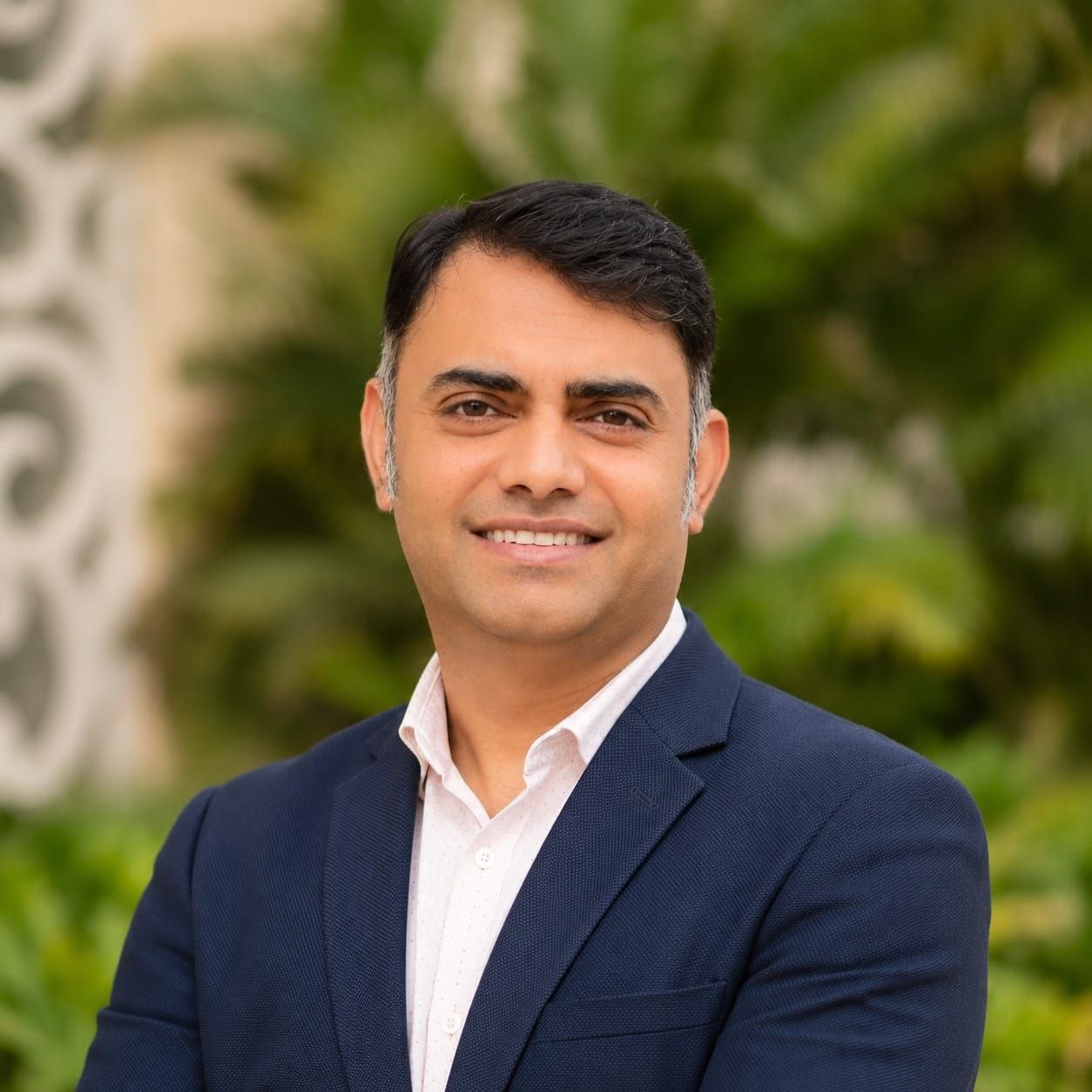
I find where your growth is leaking and fix what matters first
Sankaram: crossing over into a new phase. Moving a brand off its plateau and onto the next growth curve
Who you'll work with
I've spent 20+ years running growth for consumer businesses in markets of 70 to 240 million people, at Airtel, Vodafone Idea, Vodafone, Tata Docomo and Idea Cellular. Markets where the competitor is one tap away and the customer decides again every month.
I started in sales, then moved through product, customer value management and brand before running marketing. Most recently I headed marketing operations for Airtel in West Bengal and Kolkata, a business with 23M+ customers, as growth partner to the business unit CEO. I sat on the operating plan, decided where the money went, set prices and propositions, then worked with field teams, distributors and store staff until the plan survived the market.
That last part is what I bring to Sankaram. Plenty of people can write a growth plan. Fewer have made one work on a Saturday afternoon in a store that isn't selling.
I started Sankaram because consumer brands at the plateau face exactly the problems I've spent my career on, without the time or budget to hire someone like me full time.
— Mihir Singh, Founder
Questions founders ask
The category is different. The problems aren't. Rising acquisition cost, customers who leave, repeat purchase, pricing, channel conflict, store economics: telecom faces every one of them, at a scale of millions of customers a month, with a competitor one tap away. The discipline transfers. I learn your category fast, and you bring the product knowledge.
An agency runs channels. I decide what the channels should be doing, and hold them to it. Many founders keep their agencies. They just get more from them.
Me, personally. As Sankaram grows, I may bring in specialist partners for specific pieces of work. If I do, I'll tell you upfront.
Yes. Sales, marketing spend, marketplace and customer data for the last 12 months. I sign a confidentiality agreement before you share anything.
About 2–3 hours across the Growth Diagnostic, plus the final readout. The fractional role needs a weekly 60-minute growth review.
The Growth Diagnostic is a fixed fee agreed upfront, based on the size of your business. The fractional role is a fixed monthly fee. I'll share exact numbers on our first call.
That works. I'll still look at the whole system briefly, because retention problems often start in acquisition, but the work can focus on one area.
Wherever your business is. Most of the work happens over video calls, so location is never a constraint. In-person sessions, such as the kick-off when we start working together, are agreed as part of the engagement.
You tell me what's going on. I ask questions, tell you honestly what I'd look at first, and whether I think I can help. No pitch, no deck.
Start a conversation
Tell me in a few lines. I read every message myself and reply within 24 hours with an honest next step.
Available 9 am to 8 pm IST.